
That’s what people were talking about just a few years ago, but they’re not talking about it anymore.
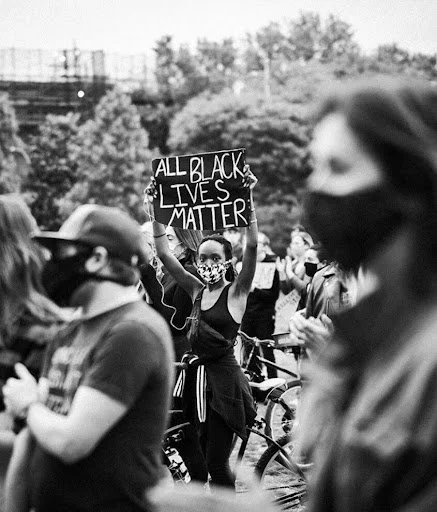
Hate crimes have surged over 108% since 2019, with anti-Black hate crimes doubling since 2014. Racism is at a boiling point, rivaling levels not seen since the civil rights era. And, with the recently declared war on DEI threatening an all-out assault on equality and systematic rewriting of history, Alexander’s story becomes even more important than it was when we began this project. Long before Emmett Till, Trayvon Martin, and others, there was Alexander McClay Williams—a 16-year-old Black teenager, sentenced to death for a crime he didn’t commit.
In JUSTICE DELAYED, three families unite to overturn this harrowing injustice and demand both accountability and reparations for the damage done. As a first-generation Israeli-American director educated in a predominantly Black school in Pennsylvania, I am no stranger to the realities of racism and the rising tide of antisemitism. My family history spans generations and continents scarred by war and persecution, and I am driven to tell Alexander’s story with urgency and truth.
This film tackles hard questions: how do we not only seek justice but reckon with the legacy of harm and make reparations to communities that have borne the brunt of systemic violence? JUSTICE DELAYED is a call to confront our shared history and dismantle the structures that sustain oppression. Alexander’s story isn’t just a relic of the past; it’s a beacon of hope, resilience, and the enduring fight for equality and reparative justice.
POST-RACIAL
AMERICA

Dafna Yachin
DIRECTOR/PRODUCER
A HISTORY OF
STARK REALIZATIONS
Alexander’s is a quintessential case that serves as an icon for much that is wrong with a criminal justice system skewed by race and socio-economics. It’s not just a relic from the past. His historic injustice still reverberates from his arrest and unjust execution,
to his family’s ongoing quest for justice today.
There are few stories like Alexander’s. His death in Pennsylvania’s electric chair at the age of 16, is a dreadful milestone. No one that young has been executed since. Similarly, 14-year old George Stinney, Jr., was unjustly executed in 1944 in South Carolina
for the murder of two young white girls, he did not commit.
The dynamics of Stinney’s case were directly relatable to Alexander’s, because of his coerced confession without a parent or attorney present, because he was sent to the electric chair; and because Stinney’s posthumous exoneration due to racism and violations of his Constitutional rights were the justification for
why Judge Kevin F. Kelly overturned Alexander’s 1931 conviction, employing the rarely employed concept of coram nobis, dating back to 13th century English Common Law.
Alexander’s story must be told as widely as it was in 1930 when
it made national headlines. It is a cautionary tale and call for restorative justice to change a broken legal system that prioritizes convictions over conscience and Constitutional rights. Every poor person or person of color today is at risk of a system that prioritizes filling prisons based on race and inequity, instead of pursuing equal justice under law.
Sam Lemon
AUTHOR/PRODUCER